$700 Billion and Counting: The AI Infrastructure Bet That Will Define the Decade
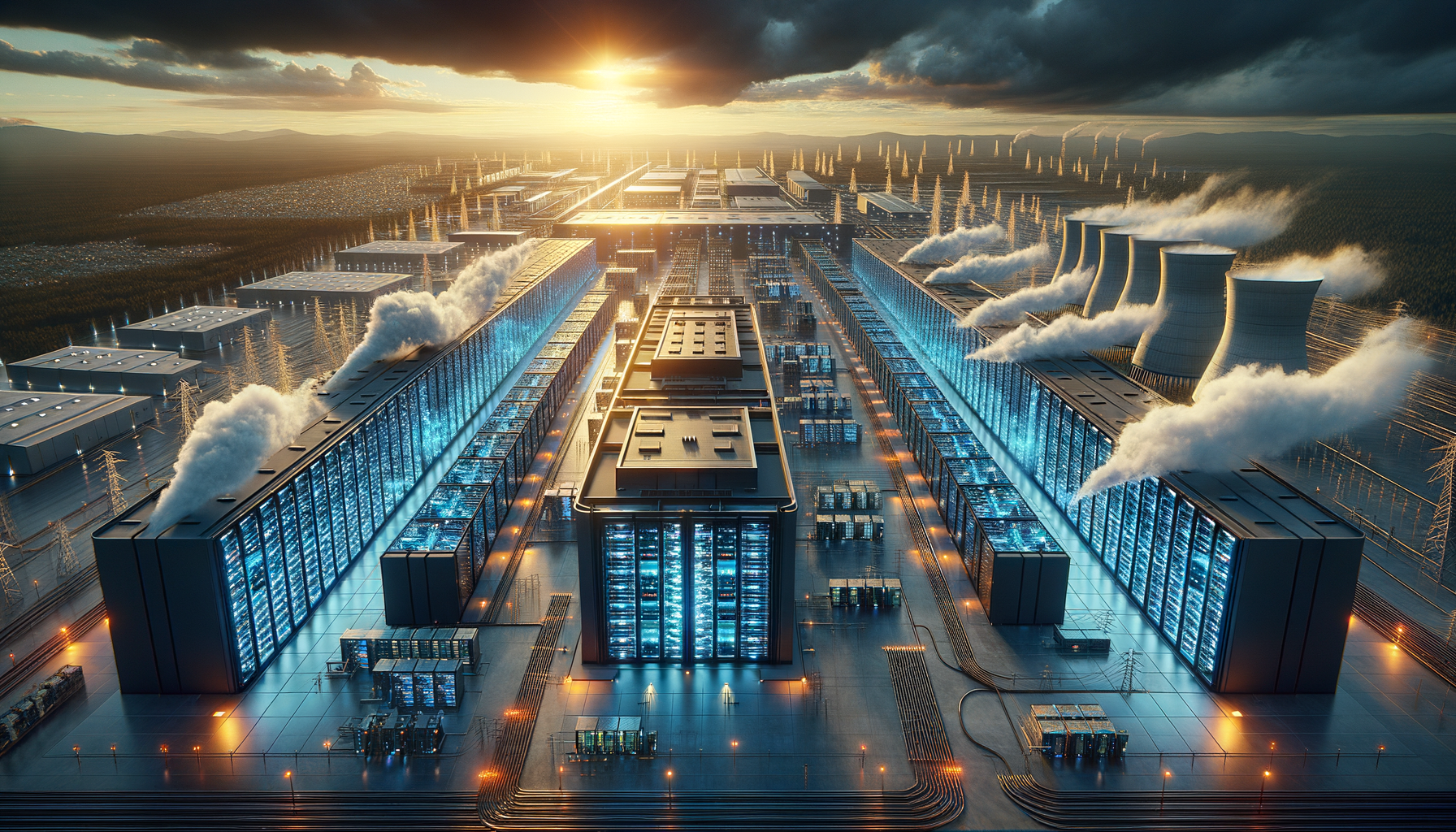
The numbers coming out of Big Tech this week are almost too large to comprehend. Amazon has committed $200 billion in data center capex for 2026. Google is spending $175–185 billion. Meta is all in at $115–135 billion. Add it up and you’re looking at nearly $700 billion in infrastructure spending — in a single year — all chasing the same thing: AI compute.
This isn’t a bubble story. It’s an infrastructure arms race, and if you’re a developer, it’s going to reshape what you build, how you build it, and who you build it for.
Why $700 Billion?
The simple answer: AI inference at scale is brutally expensive.
Training a frontier model once costs hundreds of millions. But serving that model to millions of users, every day, 24/7 — that’s the real cost center. Every ChatGPT response, every Copilot suggestion, every AI-generated image burns compute. And demand is only accelerating.
NVIDIA’s fiscal Q4 2026 data center revenue hit $62.3 billion — up 75% year-over-year. Their Q1 2027 guidance is $78 billion. These aren’t tech company numbers. These are oil company numbers.
The hyperscalers aren’t just building more of what they have. They’re racing to secure power. We’re talking nuclear-backed data sites — including a proposed 5GW Hyperion facility in Louisiana. Microsoft, Google, and Amazon have all signed or are negotiating nuclear power agreements specifically for AI workloads.
What the Stargate Deal Tells Us
OpenAI, SoftBank, and Oracle recently announced Stargate — a $500 billion, 5-year infrastructure commitment backed by regulatory fast-tracking from the U.S. government. The first $100 billion is already moving.
The message is clear: this is now considered critical national infrastructure. Governments are treating AI compute capacity the same way previous generations treated highways and power grids.
For developers, this means a few things:
Inference costs will drop — eventually. Massive supply increases always compress margins. The GPU shortage of 2023–2024 was a bottleneck. The trillion-dollar buildout is a bet that demand will justify the supply.
Multi-cloud and custom hardware is the future. Broadcom projects AI semiconductor revenue doubling via custom accelerators. AWS has Trainium, Google has TPUs, Meta has MTIA. The era of “just use NVIDIA” is ending for hyperscale workloads.
Power constraints are the new bottleneck. You can have all the GPUs in the world, but if your data center can’t get reliable power, none of it matters. The companies that crack energy — nuclear, geothermal, grid-scale batteries — will win the infrastructure war.
What This Means for You as a Developer
Most of us aren’t building hyperscale infrastructure. But we’re building on it. And these investments create real opportunities:
Cheaper APIs, more capable models. More compute means bigger models, faster inference, lower API costs. GPT-5, Claude 4, Gemini Ultra 2 — whatever’s next will be more capable and more affordable than today’s models. Build now, the floor will keep rising.
Edge AI becomes a hedge. With hyperscalers dominating centralized compute, there’s a counter-movement: running models locally, on-device, at the edge. Apple Silicon, Qualcomm, and custom ARM chips are quietly becoming competitive AI platforms. Developers who understand both ends of the spectrum — cloud and edge — will be valuable.
Agent infrastructure is the next layer. The Stargate pitch isn’t about chatbots. It’s about autonomous AI agents running continuously, managing tasks, making decisions. The infrastructure being built today is sized for that future. Frameworks like LangGraph, OpenAI Assistants, and Amazon Bedrock Agents are early indicators of where application development is heading.
The Risk Nobody Is Talking About
There’s a scenario where this ends badly. $700 billion in capex is a massive bet on sustained AI demand growth. If enterprise AI adoption stalls — if the ROI doesn’t materialize for most companies — there will be a brutal reckoning.
We’ve seen this before. The fiber optic buildout of the late 1990s created infrastructure that eventually powered the modern internet — but it also destroyed billions in shareholder value first.
The optimistic read: AI demand is real, accelerating, and still in early innings. The infrastructure will be absorbed.
The pessimistic read: everyone is building for a future that arrives slower than expected, and the correction will be severe.
My bet? The demand is real. But the timelines are always longer than the hype suggests. The developers who survive and thrive will be the ones who build useful things today — not the ones waiting for AGI to arrive next quarter.
Sources: NVIDIA Q4 2026 Earnings, TechCrunch Infrastructure Deals Report (Feb 28, 2026), Fortune AI Workforce Analysis